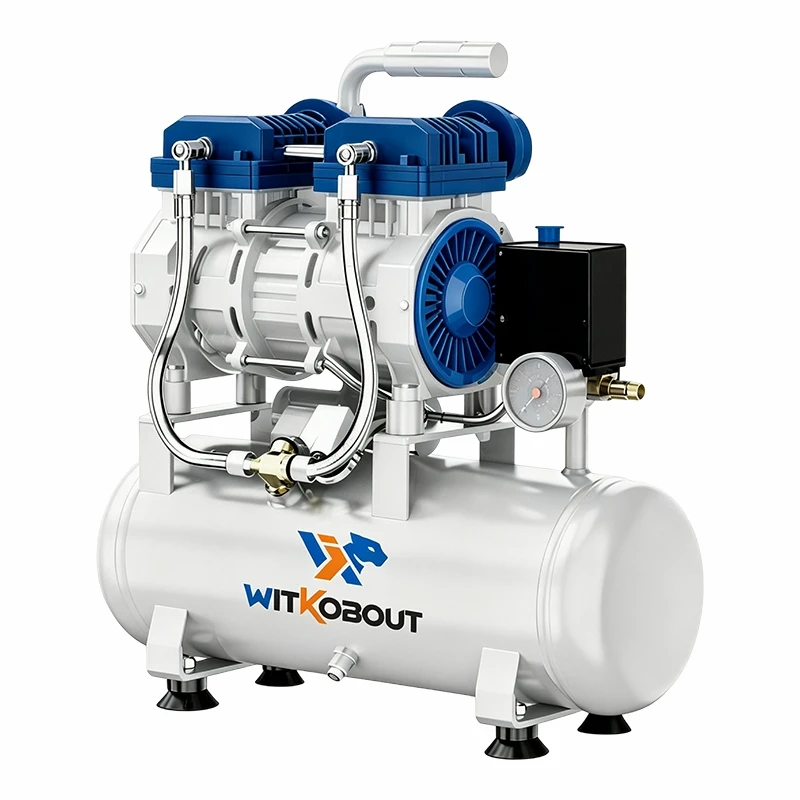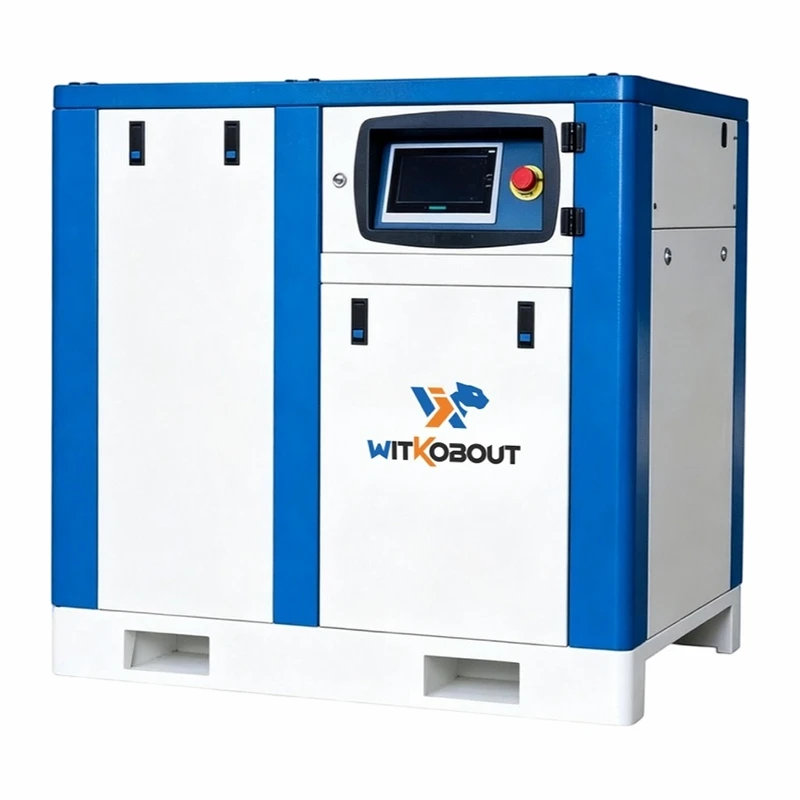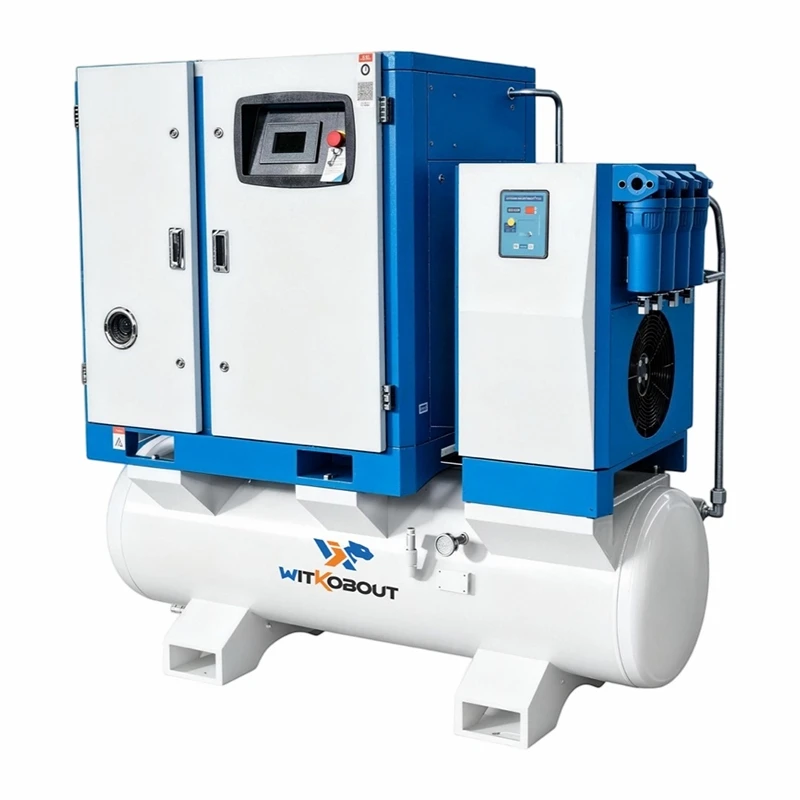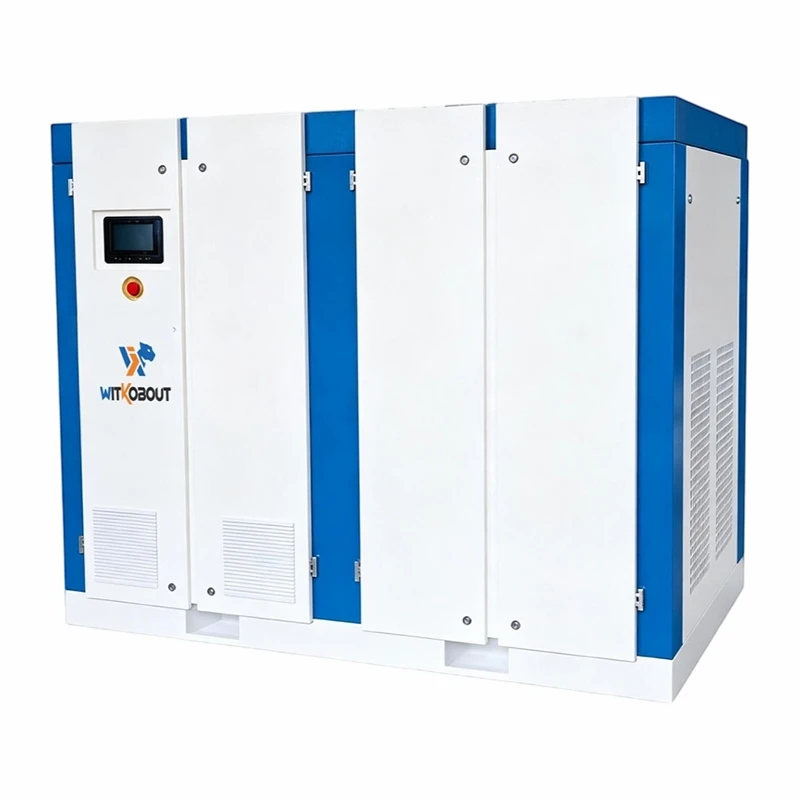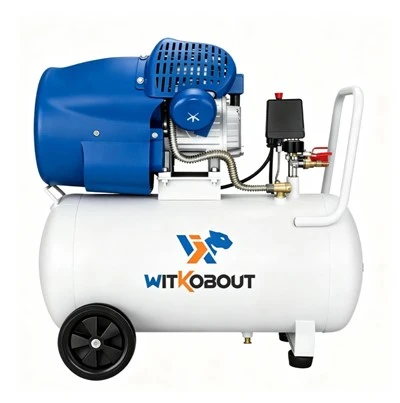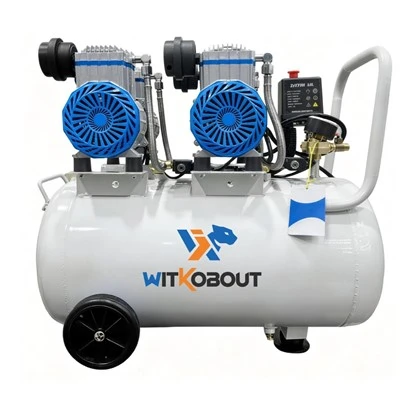
The core of the basic design of a compressor is to rely on mechanical structure to change the gas volume and achieve the conversion of low-pressure gas to high-pressure gas. The equipment relies on the principle of volumetric compression to complete the entire cycle of gas suction, compression, and discharge through regular changes in the internal chamber volume. During operation, first expand the compression chamber volume to create a negative pressure environment, smoothly suck in atmospheric gas, and then gradually reduce the chamber volume to squeeze and work on the sealed gas, effectively increasing the gas pressure and ultimately outputting a high-pressure gas source that meets the requirements of the equipment operating conditions. The entire design follows the laws of gas pressure and volume changes, with a simple and stable structure that fundamentally achieves efficient conversion of mechanical energy to gas pressure energy, and is suitable for use in various pneumatic and refrigeration supporting equipment.
The design of continuous pressure stabilizing compression structure is a key design concept to ensure the stable operation of the compressor. The traditional compression structure is prone to problems such as large pressure fluctuations and intermittent gas supply. This compressor optimizes the operation logic of the dynamic and static components in terms of structure, and replaces the traditional intermittent compression mode with eccentric rotation and continuous meshing motion, making the gas compression process continuous and uninterrupted. Simultaneously equipped with precise intake and exhaust valve structures, it automatically opens and closes according to changes in pressure inside the chamber, accurately controls the intake and exhaust timing, effectively balances the internal air pressure of the equipment, avoids problems such as sudden pressure rise and fall, gas reflux, etc., ensures uniform and stable output air pressure, and meets the production needs of long-term continuous gas supply to the equipment.
The design of temperature reduction, voltage stabilization, and safety adaptation is an important consideration for the long-term operation of compressors. During the gas compression process, a large amount of heat is continuously generated. The equipment is designed with a complete heat dissipation and cooling structure, which timely removes the high temperature generated by compression through air or water cooling systems, controls the temperature of the body and gas, and avoids problems such as decreased compression efficiency and component aging caused by high temperature. The overall structure adopts a closed design, combined with auxiliary structures such as pressure balance and overload protection, which can reduce gas leakage, improve compression efficiency, and provide protection in case of abnormal pressure and overload operation. The overall design of the machine takes into account compression efficiency, operational stability, and safety protection, with a compact structure and stable working conditions, suitable for industrial normalized continuous operation scenarios.